
Remarks from the President
Dear DISTED Community,
The first week of October has flown by, and it’s great to see our students settling back into the rhythm of learning. This time of year also means some of our students will be sitting for their A Level examinations. We wish them all the best and hope all their hard work and preparation will pay off.
Meanwhile, our marketing team will be taking a short and well-deserved break to recharge and get ready for the new academic year in 2027. We look forward to bringing more exciting programmes and events to DISTED College in the year ahead.
We are currently preparing for our 2026 Convocation Ceremony on 31 October. We are excited to celebrate 52 students from six courses as they receive their diplomas and degrees and mark an important milestone in their lives. It will be a special day for everyone at DISTED, especially our graduates and their families.
Wishing everyone a wonderful weekend and a productive week ahead!
President
Dato’ Dr (h.c) Lim Si Boon
The Right Minimum Wage: Workers vs Businesses?
Compensation is one of the most challenging issues in human resource management. Although Herzberg’s Two-Factor Theory identifies pay as a hygiene factor that prevents dissatisfaction rather than directly motivating employees, sufficient income is still essential for meeting basic living needs. Therefore, setting the right minimum wage requires balancing employee welfare with business sustainability.
Malaysia, has since late August 2026, been debating a proposal to increase the minimum wage from RM1,700 to RM3,100. The Malaysian Trades Union Congress (MTUC) supports the increase, arguing that it reflects the rising cost of living. However, the Federation of Malaysian Manufacturers (FMM) has warned that such a sharp increase could raise business costs and affect the labour market.
From the workers’ perspective, a living wage should cover essential needs such as food, housing, transportation, healthcare, and education. Bank Negara Malaysia has estimated that a single adult in Kuala Lumpur needs approximately RM2,700 per month to achieve a reasonable standard of living. A higher wage can reduce financial stress, improve morale, reduce employee turnover, and potentially increase productivity.
However, employers, especially Micro, Small and Medium Enterprises (MSMEs), may face higher payroll costs. Businesses may increase the prices of products and services to cover these costs. If wages increase faster than productivity, Malaysia is also at risk of becoming less competitive and less attractive to foreign investors.
Suffice to say, the government needs to carefully determine a balanced minimum wage that protects workers’ livelihoods while allowing businesses to remain competitive, sustainable, and productive.
Tan Pei Shi,
Lecturer, School of Business and Hospitality
Building the Future of E-Commerce
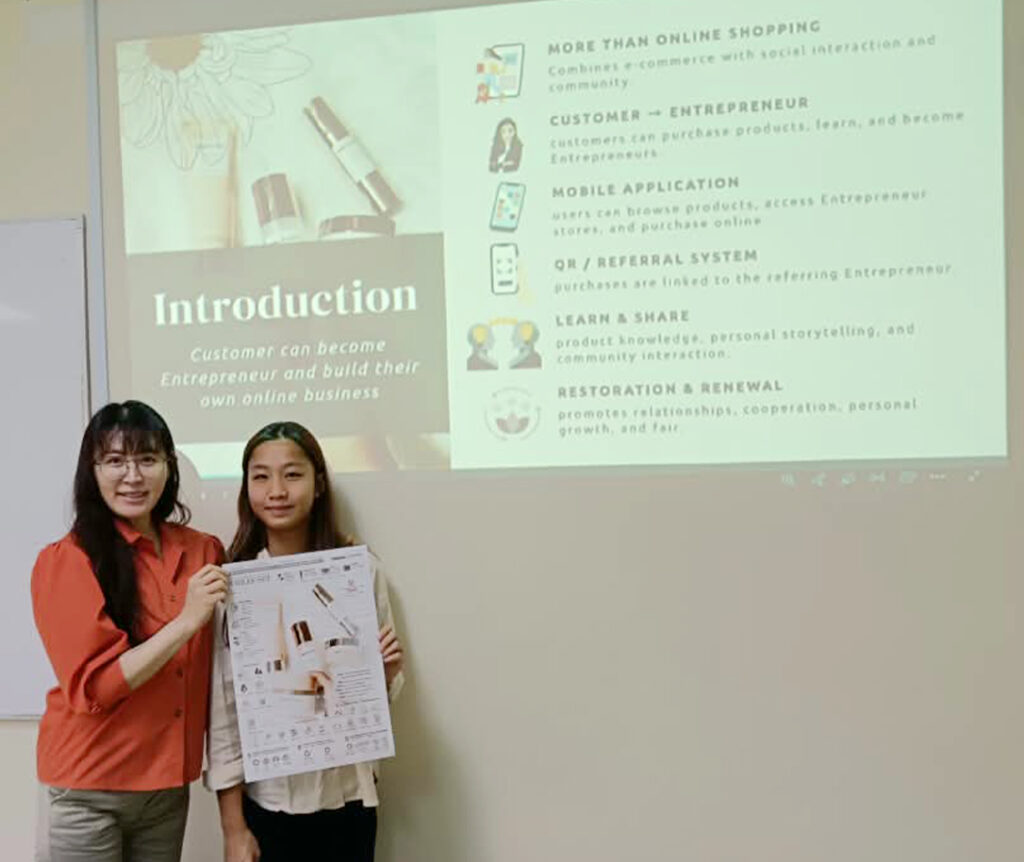
After a semester of exploring key e-commerce concepts, it was time for our Foundation in Science students to put into practice what they had learnt by creating their own e-commerce companies.
Armed with their knowledge on business models, value propositions, revenue models, target markets, marketing strategies, customer relationships, e-commerce features, business processes, and innovation in e-commerce, they were able to present the business models of different online businesses through posters.
One of the posters showcased a social commerce business model that combined online shopping, entrepreneurship, learning, and community engagement – illustrating elements such as customer and entrepreneur roles, product offerings, target customers, online shopping features, referral and commission functions, and the overall purchasing process.
The poster also demonstrated how students managed to incorporate current and future e-commerce ideas, including secure payments, order tracking, personal online stores, referral links, social engagement features, AI-based recommendations, AI customer service, and live shopping. This allowed them to connect the theories discussed in class with practical digital business applications.
Through their learning and project experience this semester, our students were able to strengthen their creativity, teamwork, communication, problem-solving, and presentation skills. More importantly, they learnt how to transform a business idea into a structured e-commerce model, identify suitable target customers, and design a customer journey, while communicating their ideas effectively through a professional visual presentation.
Nanthini Pattabiraman
Lecturer, School of Computing & Engineering
Mooncake Festival: Is it only about the moon?
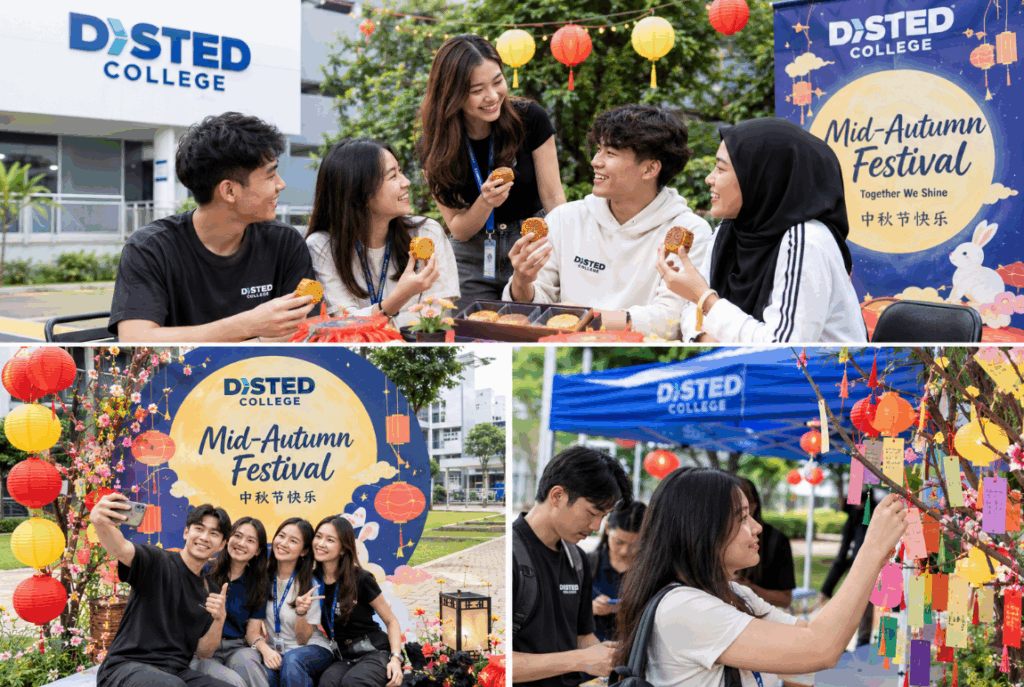
The Mooncake Festival, more formally known as the Mid-Autumn Festival, is one of the most beloved celebrations in Asian culture. And, while it is often called “the festival of the moon,” the moon serves less as an object of worship and more as a luminous symbol around which families, communities, and cultures gather to express gratitude, longing, and hope.
Held on the 15th day of the eighth lunar month, when the moon is at its fullest and brightest, the festival traces its roots to ancient harvest rituals in which emperors and farmers alike offered thanks for the season’s bounty – a practice that gradually evolved into a celebration of reunion and harmony. The roundness of the full moon became a metaphor for completeness and togetherness. It became a time when family members would travel home, share meals, gaze at the moon, and exchange mooncakes – dense, sweet pastries with different fillings whose circular shape intentionally mirror the moon to symbolise unity, fullness, and good fortune.
Yet, the festival is far more than moon-gazing and mooncakes; it is steeped in mythology, most famously the legend of Chang’e, the Chinese moon goddess who ascended to the lunar palace after drinking an elixir of immortality, leaving behind her husband Hou Yi, whose annual offerings to the moon express enduring love and longing. Across Asia, the celebration takes on distinct local flavours. In Korea, Chuseok features ancestral rites and songpyeon rice cakes; in Vietnam, Tet Trung Thu highlights lantern processions by children and lion dances; and in Chinese communities worldwide, lantern displays, dragon dances, and even matchmaking customs add layers of festivity beyond the celestial.
At every learning institution, including DISTED College, the Mooncake Festival is a wonderful opportunity to bring together people through stories, traditions, food and culture. The moon has always and continues to be a shared symbol that connects generations and different cultures, reminding us of the importance of gratitude, reunion and keeping traditions alive.
Joyce Ung Xiao Yan
Student, School of Communication, Arts and Multimedia
Self-Care Is More Than Taking a Day Off
When we hear the phrase “self-care”, we might picture taking a day off, sleeping in, watching films or spending the whole day doing nothing. These can all be enjoyable, and sometimes they are exactly what we need. Yet self-care is more than simply stepping away from our responsibilities.
From a psychological perspective, self-care involves recognising our needs and responding to them in ways that support our well-being. This begins with awareness. Are we physically tired and in need of rest? Mentally overwhelmed and in need of some space? Feeling disconnected and needing meaningful social interaction? Or are we avoiding something that continues to weigh on us?
Mindfulness can help us develop this awareness. By paying attention to the present moment, we can notice our thoughts, feelings and bodily sensations rather than automatically reacting to them. A student who notices exhaustion may realise that proper rest would be more helpful than forcing themselves to study. Another might recognise that what they need is not more sleep, but a conversation with someone they trust or a clearer plan for managing their workload.
The same activity can also serve different purposes. Watching a favourite series may help someone genuinely unwind, while repeatedly using entertainment to avoid a problem may leave the underlying issue unresolved. Rest is not the problem; we need to pay attention to what our choices are doing for us.
Self-care, then, is not about being productive all the time, nor is it about escaping our responsibilities. It is about slowing down, noticing what we need and making intentional choices that help us care for ourselves in the long run.
Tan Wei Jun
Lecturer, School of Psychology
Physics Olympiad Development Camp 2026: Empowering Future Physicists
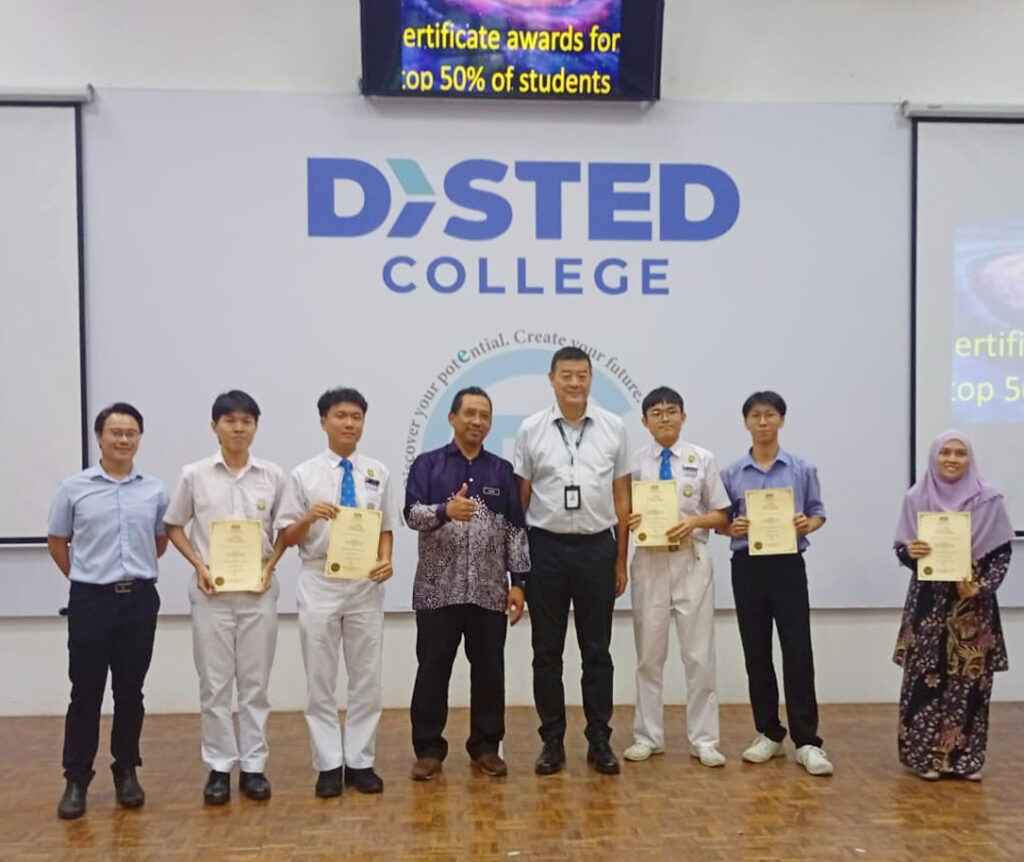
DISTED College is pleased to have once again hosted the 2026 Physics Olympiad Development Camp, working alongside the Pulau Pinang State Education Department (JPNPP) and the Malaysia Physics Olympiad (OFM). Held from 18 to 20 August at our campus, the camp brought together 54 of the state’s top Physics students from the Lower 6 Form. This was our second year partnering with JPNPP on this programme, and we had the full backing of our President, Dato’ Lim Si Boon, whose longstanding support for STEM initiatives is a driving force behind events like this.
This year’s camp built on what we learnt last year, with a stronger focus on getting students ready for the International Physics Olympiad (IPhO) and Scientific (ISPhO) 2027 screening tests, which will take place on 12 December later this year. Over the three days, we worked on strengthening their grasp of key physics concepts, sharpening their practical lab skills, and giving them more exposure to the kind of analytical and computational thinking that these competitions demand.
One new addition to this year’s camp was the prize-giving ceremony. Wanting to recognise students who put in extra effort and perform well, we awarded gold, silver, and bronze prizes to the top 50% of participants. The certificates were presented during the closing ceremony by En. Fadzil bin Sadikin, Deputy Director of Education (Student Development Sector) from JPN Pulau Pinang.
At DISTED, we are committed to supporting STEM education, and our partnership with JPNPP and OFM is a natural extension of that. We believe in giving students learning experiences that go beyond theory, and this camp is a good example of how we try to do that – by connecting classroom knowledge with real problem-solving and hands-on practice.
Dr. Tan Fuyi
Senior Lecturer, School of Pre-University Studies


