
Remarks from the President
Dear DISTED Community,
Welcome to our campus for the May intake of HELP University Degree Programs. We look forward to seeing them settle in and participate in campus activities.
We recently held our second Leadership Program — Lead, Link & Lift — from 5 to 7 June. The participants, including Student Leaders and scholarship students, learned in a different, experiential, and uplifting environment. They gained good leadership habits, teamwork essentials, and emotional management skills.
Congratulations to Muhammad Irfan and Nur Irdina Qaisara, who have been offered scholarships under our STAR Education Fund Program. We still have limited scholarship opportunities, so we encourage you to apply.
President
Dato’ Dr (h.c) Lim Si Boon
Yeoh Soon Meng: A Journey of Excellence in English
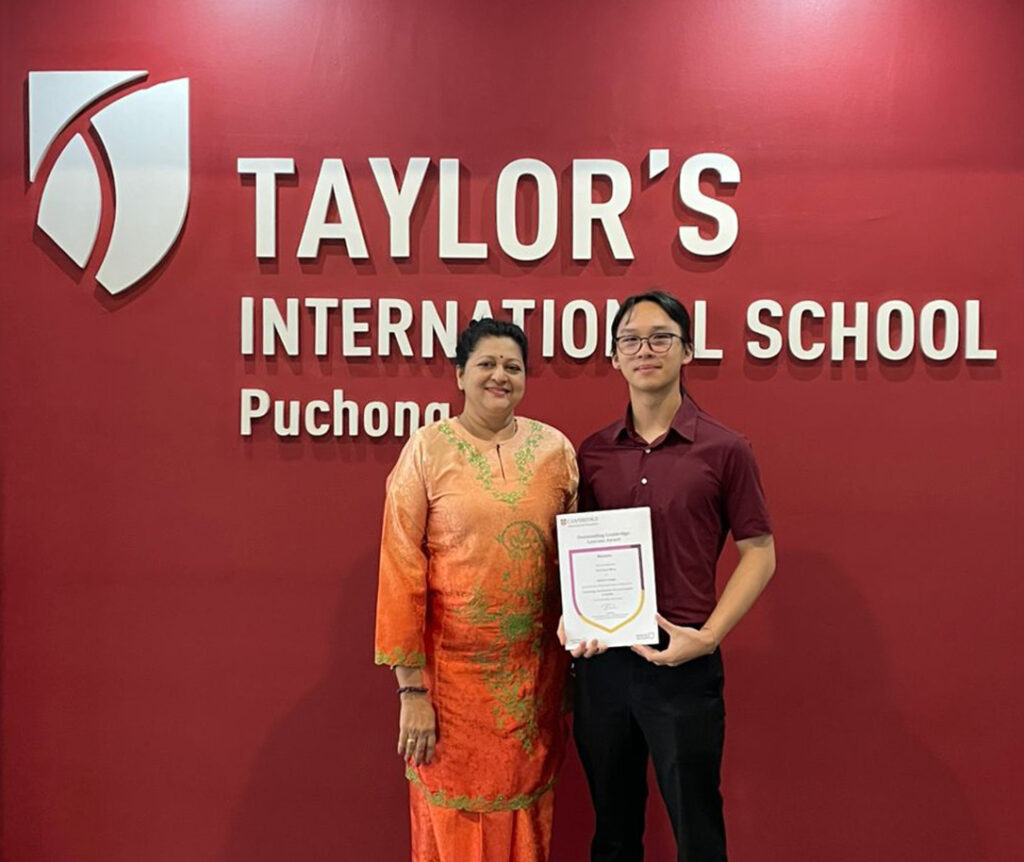
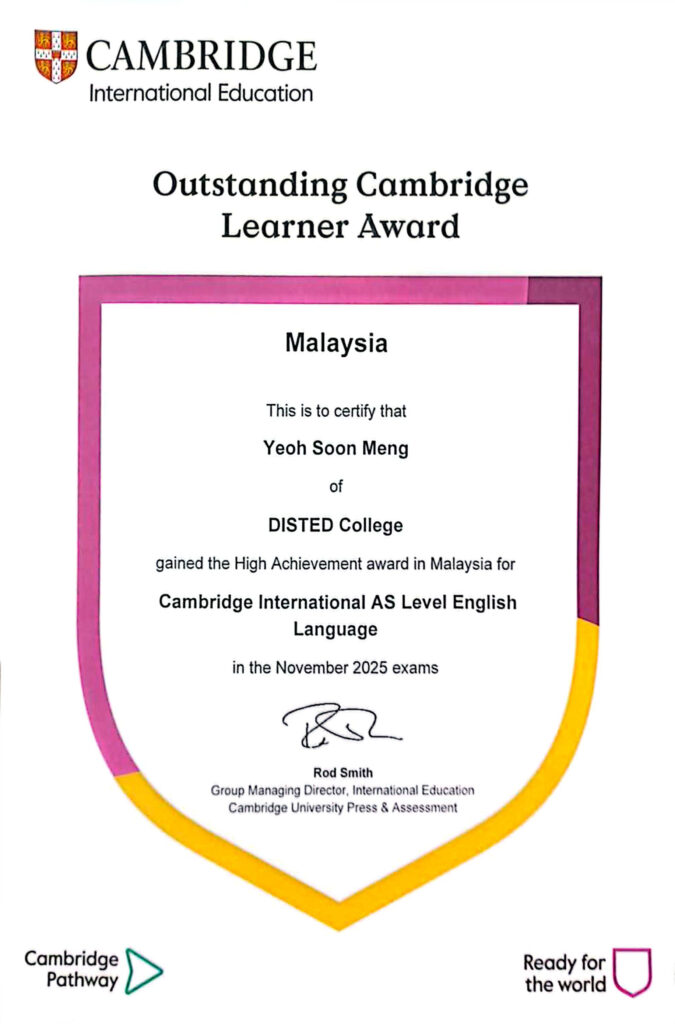
Yeoh Soon Meng has been recognised for his outstanding achievement in the English Language, receiving the High Achievement Award in the Cambridge International AS October/November 2025 examination. The award ceremony was held on 23 May 2026 at Taylor’s International School, Puchong, Kuala Lumpur.
Soon Meng, a former student of Han Chiang High School, demonstrated early interest and commitment to language development through his active involvement in the English Debate Club and participation in the World Scholar’s Cup. These experiences provided him with exposure to a wide range of academic disciplines and global perspectives, significantly strengthening his proficiency in English, despite coming from a Chinese private school background.
His training in Asian Parliamentary-style debate further enhanced his ability to think critically and articulate ideas effectively under pressure. These skills proved valuable in his A-Level English examinations and contributed to his academic success. Following graduation, Soon Meng continued his involvement in debate as a President, Advisor and Coach, gaining deeper insight into language from both a learning and leadership perspective.
Currently, he remains an active participant in the Model United Nations (MUN) circuit in Malaysia, where he continues to refine his communication and diplomatic skills. His consistent engagement with reading, writing and global discussions reflects not only a passion for the English language but also a strong commitment to lifelong learning and excellence.
Vilashini Kandaiah
Lecturer, School of Pre‑University Studies
Career Talk by the School of Business & Hospitality: Exploring Careers in a Digital Economy
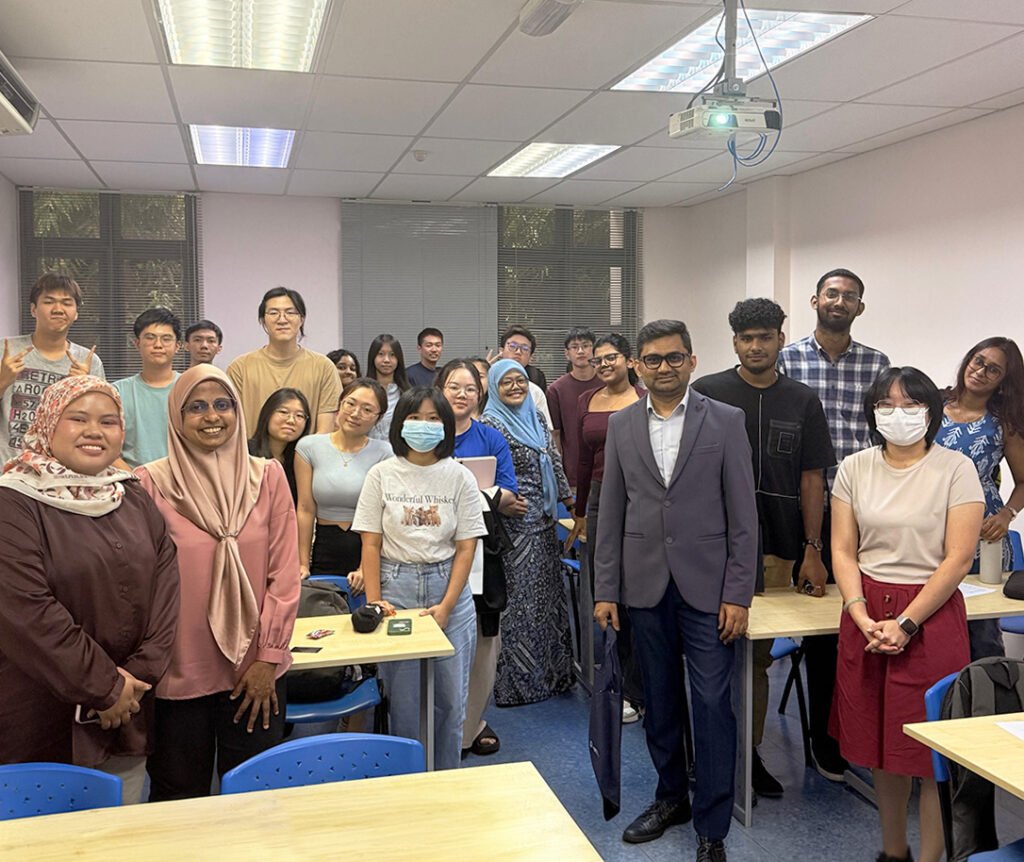
The School of Business and Hospitality at DISTED College organised an industry career talk featuring Mr Abdul Kareem Shaikh, Finance and Global Business Services (GBS) Team Lead from Swarovski. The session was attended by students from the Accounting and Information Technology (IT) programmes, with the aim of providing exposure to career opportunities and current developments in the digital economy.
During the session, the speaker shared valuable insights into the role of Global Business Services in multinational organisations. He explained how digital transformation, automation and enterprise systems are reshaping business operations and finance functions. Students were introduced to the increasing demand for professionals with expertise in finance processes, digital systems, data management and technology‑enabled business operations.
Key business processes commonly used in shared services environments—such as Order‑to‑Cash (OTC), Procure‑to‑Pay (P2P) and Record‑to‑Report (R2R)—were discussed, giving students a clearer understanding of operational workflows. An interactive activity further enhanced learning by demonstrating how transactions are managed within integrated digital systems.
In addition to technical insights, the session also emphasised essential employability skills. Topics such as communication, adaptability, problem‑solving, interview preparation and professionalism were highlighted to help students better prepare for internships and future careers.
Overall, the session provided meaningful industry exposure and strengthened students’ understanding of evolving career opportunities at the intersection of accounting and IT within a technology‑driven business environment.
Sharizan Abdul Rashid
Programme Lead, School of Business and Hospitality
Communication for Social Impact: Inspiring Change Through Strategic Communication
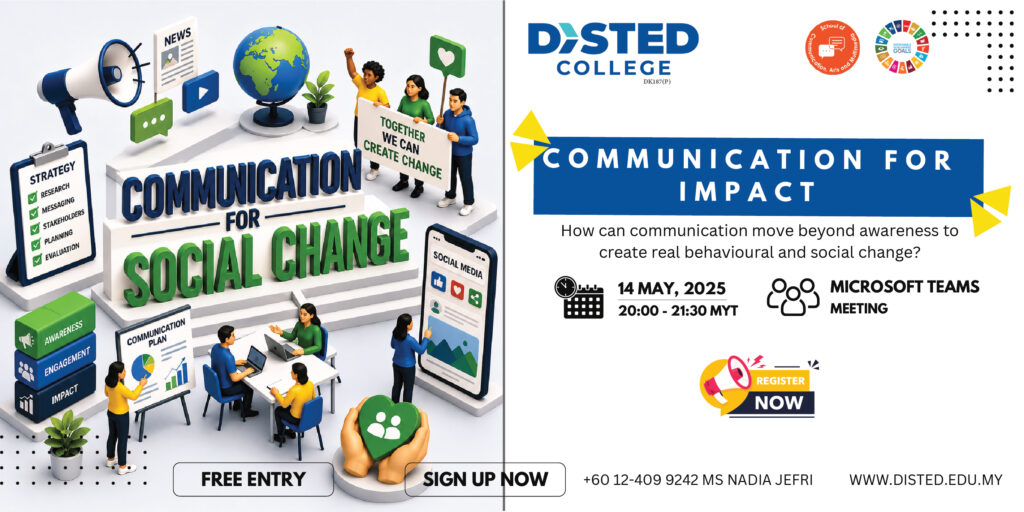
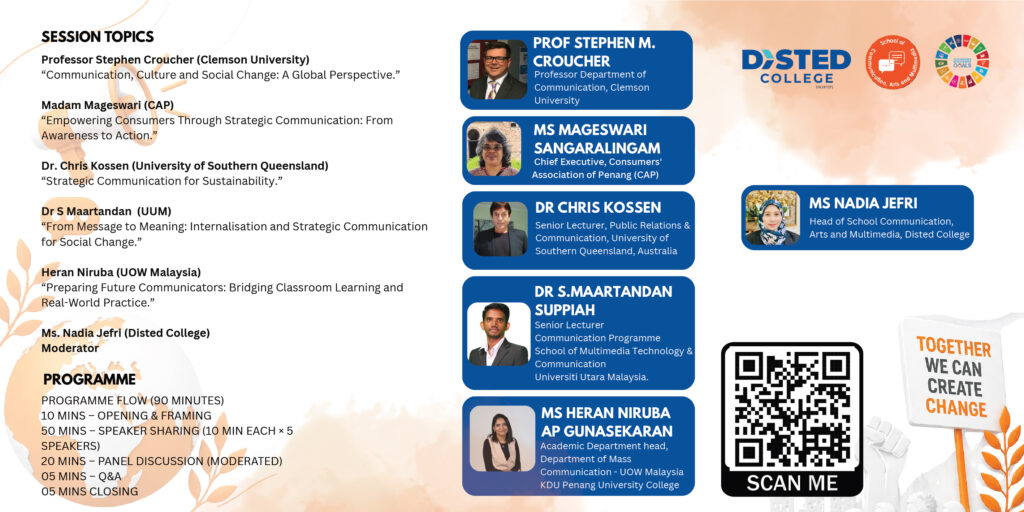
In today’s fast‑paced digital landscape, communication has become more accessible and influential than ever before. However, despite the constant flow of information across social media and digital platforms, many societal challenges—such as misinformation, environmental sustainability, public health concerns and declining public trust—continue to persist. This underscores an important reality: communication must move beyond awareness to inspire meaningful behavioural change and collective action.
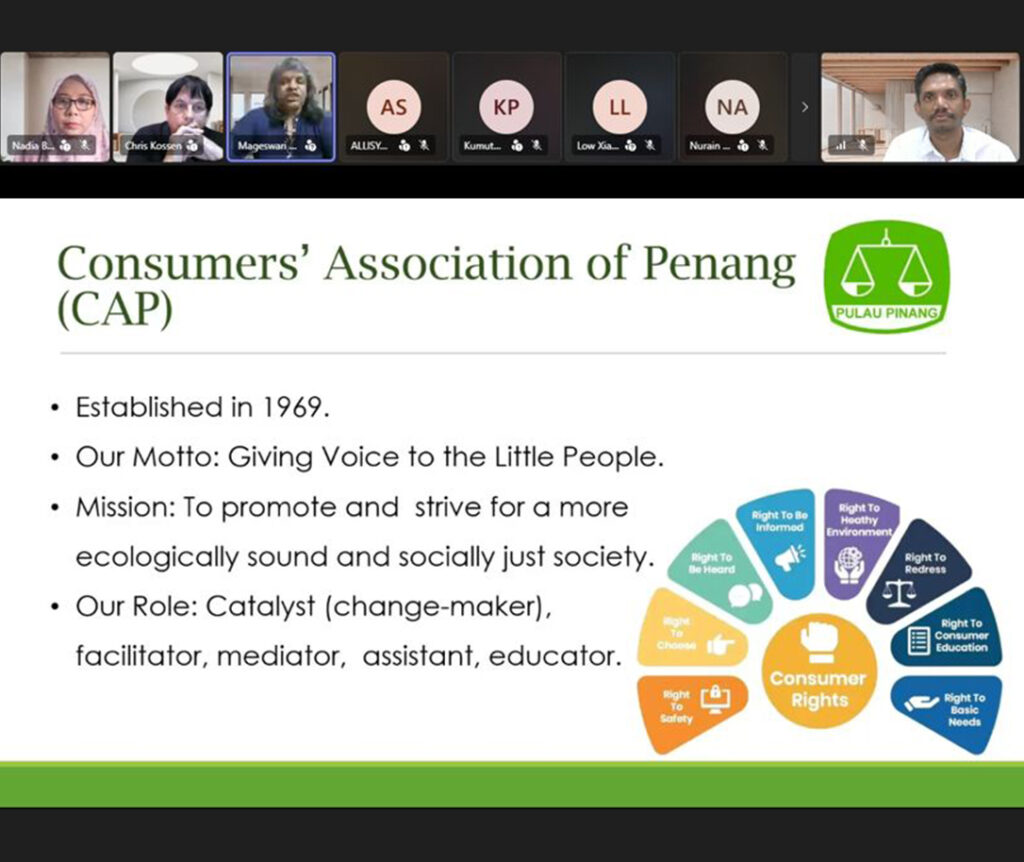
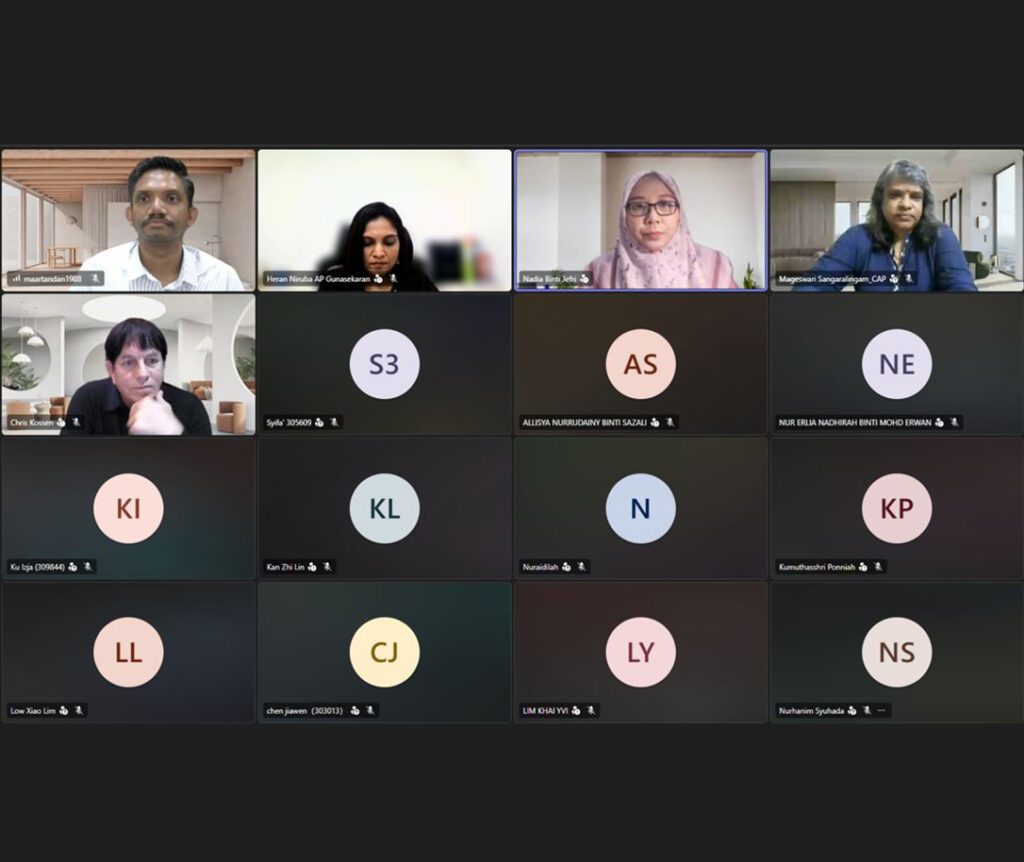
Recognising this, the School of Communication, Arts and Multimedia (SCAM) organised the International Webinar on Communication for Social Impact, bringing together approximately 70 participants from public and private higher education institutions across Malaysia. The session featured a distinguished panel of speakers, including Prof Stephen M. Croucher (Clemson University), Dr Chris Kossen (University of Southern Queensland), Dr S. Maartandan Suppiah (Universiti Utara Malaysia), Ms Mageswari (Chief Executive of CAP) and Ms Heran Niruba (UOW Malaysia). The session was moderated by Ms Nadia Jefri, Head of SCAM.
Centred on the question, “How can strategic communication move beyond awareness to create real and sustainable social change?” the webinar explored key areas such as intercultural communication, sustainability, consumer empowerment, behavioural change and the development of future communication professionals.
The session reinforced the idea that effective communication plays a vital role in shaping perceptions, influencing behaviour, building trust and empowering communities. For students in Public Relations, Media Studies and Communication, the webinar offered valuable insights into the skills and competencies required to become responsible, industry‑ready professionals.
Through initiatives like this, SCAM continues to strengthen its commitment to bridging academia and industry while preparing graduates to address contemporary societal challenges.
Nadia Jefri
Head of School, School of Communications Arts and Multimedia
AI Awareness in Education
In today’s rapidly evolving technological landscape, awareness of both the benefits and limitations of Artificial Intelligence (AI) is essential. The MPU2232: AI Fundamentals for the Digital Age course plays a key role in equipping students with foundational knowledge of emerging technologies, particularly Generative AI (GenAI), and its growing influence on education and society.
The course goes beyond basic concepts, providing students with an understanding of how GenAI tools—such as Microsoft Copilot—generate content and support learning processes. A major emphasis is placed on responsible and ethical AI usage, guiding students to use these technologies as tools for learning rather than shortcuts for completing academic tasks. Students are encouraged to uphold academic integrity by avoiding plagiarism and acknowledging AI assistance appropriately.
In addition, MPU2232 fosters critical thinking skills by encouraging students to evaluate and verify AI‑generated outputs. As GenAI tools may produce inaccurate or biased information, students learn to cross‑check facts and assess reliability before accepting content. This ensures that learners remain active and analytical rather than passive users of technology.
The course also addresses potential risks associated with AI, including misinformation, bias and privacy concerns. By engaging with these issues, students develop a deeper understanding of the broader ethical and societal implications of AI.
Overall, MPU2232 prepares students to be informed, responsible and adaptable digital citizens, capable of leveraging AI effectively while understanding its impact on education and the wider world.
Nurul Annisa Azhar
Lecturer, School of Computing and Engineering
Sleep and Learning: Why “All‑Nighters” Backfire
In university life, sleep is often one of the first sacrifices students make when deadlines approach. While staying up late to complete assignments or revise for exams may seem productive, psychological research highlights that sleep is an essential part of the learning process rather than a loss of valuable time.
When students study, information does not immediately transfer into long‑term memory. The brain requires time to process, organise and consolidate new knowledge, and this process occurs most effectively during sleep. Students who consistently reduce their sleep hours may spend more time revising, yet struggle to retain the information they have learned.
Sleep deprivation also has a direct impact on cognitive functioning. A lack of rest can impair attention, concentration and problem‑solving abilities, making it more difficult for students to follow lectures, understand complex material and avoid errors. Over time, these effects may negatively influence both confidence and academic performance.
In addition, sleep plays an important role in emotional wellbeing. Students who do not get enough rest are more likely to experience irritability, anxiety and difficulty managing stress, which can further affect their ability to study effectively.
Most young adults require between seven to nine hours of sleep each night for optimal functioning. Developing consistent study habits and maintaining a regular sleep routine is far more beneficial than relying on last‑minute “all‑nighters.”
Ultimately, sleep should not be viewed as a luxury but as a crucial component of effective learning and overall well‑being.
Tan Wei Jun
Lecturer, School of Psychology


