
Remarks from the President
Dear DISTED Community,
On 10 September, we were delighted to welcome our new Pre-University Studies students at Orientation. We hope every student will embrace this new chapter with confidence, curiosity, and enthusiasm, discover new possibilities, and start building the experiences that will shape their future.
In collaboration with MABECS, we were pleased to host representatives from 21 universities from around the world to share valuable insights into the various higher education pathways available to our Pre-University students. The session provided our students with an excellent opportunity to explore international study options, understand progression pathways, and gain a broader perspective of the opportunities awaiting them after completing their Pre-University programme. The future certainly looks promising and full of possibilities for our students.
We were excited to have Mr Mattias Hoffmann, a renowned Cinematographer, residing in Los Angeles, United States, and a 7 Primetime Emmy Nomination Outstanding Cinematography for Nonfiction, share his valuable working experience on The Amazing Race across the USA, Australia, and Asia, insights, and guidance with our Degree in Marketing students on their exciting Amazing Race assignment, and also will be a great help for our Diploma in Creative Multimedia Production students, giving our students an opportunity to gain fresh perspectives and connect their creative skills with industry experiences.
We would also like to extend our heartfelt appreciation and best wishes to our staff members who are moving on to their next chapter. Thank you for your dedication and contributions. We wish you every success in your future endeavours. At the same time, we are excited to welcome our new staff members onboard as we begin the new semester. We look forward to the fresh ideas, energy, expertise, and perspectives you will bring to the DISTED community.
President
Dato’ Dr (h.c) Lim Si Boon
Malaysia Shines at IPhO 2026: A Historic Gold Medal After 15 Years

Malaysia has achieved a remarkable milestone in international physics education at the 56th International Physics Olympiad (IPhO) 2026 held in Bucaramanga, Colombia. For the first time in 15 years, the Malaysian team returned home with a gold medal, marking a proud moment for the nation.
Leading this historic achievement was Cheok Kang Ling, who secured Malaysia’s first IPhO gold medal since 2011. Her success is made even more significant by the fact that she is the first student from an independent Chinese school in Malaysia to attain this honour at the prestigious competition.
Malaysia’s outstanding performance extended beyond the gold medal. Gan Zhong Wen and Teh Jun Jie each earned bronze medals, while Tan Hong Zher and Tun Muhammad Syukri bin Tun Abdul Karim received Honourable Mentions. Together, the team demonstrated the strength of Malaysian talent and the growing excellence of science education in the country.
Behind these accomplishments lies a rigorous selection and training process led by the Malaysian Physics Olympic Committee (JKOFM) in collaboration with the Alumni of International Science Olympiad Malaysia (AMISO). Their efforts were supported by the Ministry of Education, Universiti Kebangsaan Malaysia, and DISTED College.
For DISTED College, this success holds special significance. Several members of the national team participated in the OFM 2026 Training Camp hosted by DISTED earlier this year. Witnessing these young talents progress from intensive preparation to international recognition is a source of immense pride for the college community.
Congratulations to Cheok Kang Ling and the entire Malaysian team for making history and inspiring the next generation of scientists to aim higher and dream bigger.
Dr. Tan Fuyi
Senior Lecturer, School of Pre-University Studies
Bringing Economics to Life Through Constructivist Learning Theory
The Cambridge International AS & A Level Economics (9708) syllabus places increasing emphasis on the application, analysis, and evaluation of economic concepts. Students are expected not only to understand economic theories but also to apply them to contemporary issues, interpret evidence, and make informed judgements. Higher-order thinking skills such as critical thinking, problem-solving, and evaluation are therefore central to both learning and assessment.
While learning definitions and concepts remains important, success in Economics requires students to go a step further by analysing real-life situations and considering different perspectives. Topics such as inflation, sustainability, government intervention, and globalisation often have no single correct answer. Instead, students are expected to evaluate different viewpoints and justify their conclusions using evidence and sound economic reasoning.
To support students in meeting these demands, lessons incorporate Constructivist Learning Theory, which suggests that learners develop a deeper understanding when new knowledge is connected to authentic experiences. By discussing economic issues reported in the news and relating them to syllabus content, students are encouraged to think beyond the textbook and engage more actively with the subject.
This approach helps students recognise the relevance of Economics in everyday life while strengthening their ability to analyse and evaluate current developments using economic concepts.
Ultimately, the aim is not only to prepare students for examinations but also to develop confident, independent thinkers who can make sense of the economic issues shaping their lives and the world around them.
Tan Sue Lin
Lecturer, School of Business and Hospitality
Speechcraft Programme Concludes Successfully with Inspiring Student Speeches
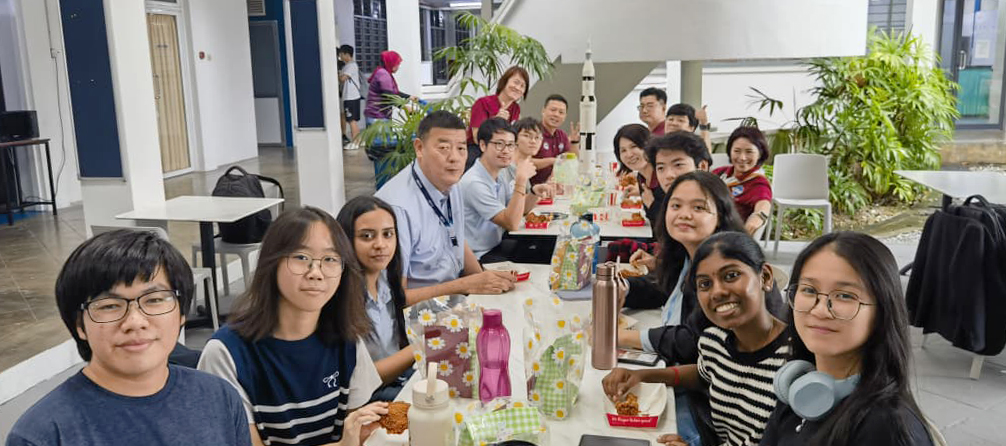
Penang, 14 August 2026 – The Speechcraft Programme, organised in collaboration with Great2B Toastmasters Club, concluded successfully on 14 August 2026, marking the end of an enriching journey of learning, confidence-building, and public speaking development for participating students.
The final session featured eight student speakers who delivered prepared speeches before an audience of peers, lecturers, and Toastmasters members. Throughout the programme, students were introduced to the fundamentals of effective communication, including speech organisation, vocal delivery, body language, and audience engagement. Reflecting the spirit of Malaysia’s diversity and the Merdeka season, participants from various backgrounds and ethnicities confidently shared personal stories, experiences, and perspectives through speeches lasting between five and seven minutes.
One of the highlights of the event was the participation of eight experienced Toastmasters evaluators who provided constructive and encouraging feedback to each student speaker. Their evaluations recognised individual strengths while offering practical suggestions for continuous improvement, embodying the core principles of the Toastmasters educational programme.
The programme showcased remarkable growth among participants. Students who initially felt nervous about public speaking demonstrated increased confidence, poise, and enthusiasm during the final showcase. Dorothy Hwang emerged as the audience favourite and was rewarded with a complimentary set lunch from DISH, courtesy of the programme coordinator.
To celebrate the successful completion of the programme, participants, Toastmasters members, and organisers gathered for a fellowship lunch at the DISTED College cafeteria. The occasion was made even more meaningful by the presence of the President of DISTED College, who congratulated students for stepping outside their comfort zones and developing essential communication and leadership skills. He also expressed appreciation to the Toastmasters volunteers and evaluators and welcomed future collaborations with the School of Communication, Arts and Multimedia (SCM).
The successful completion of the Speechcraft Programme reflects DISTED College’s commitment to holistic student development, empowering students with the confidence and communication skills needed to thrive in both academic and professional settings.
Jesscia Ang
2026 Speechcraft Coordinator
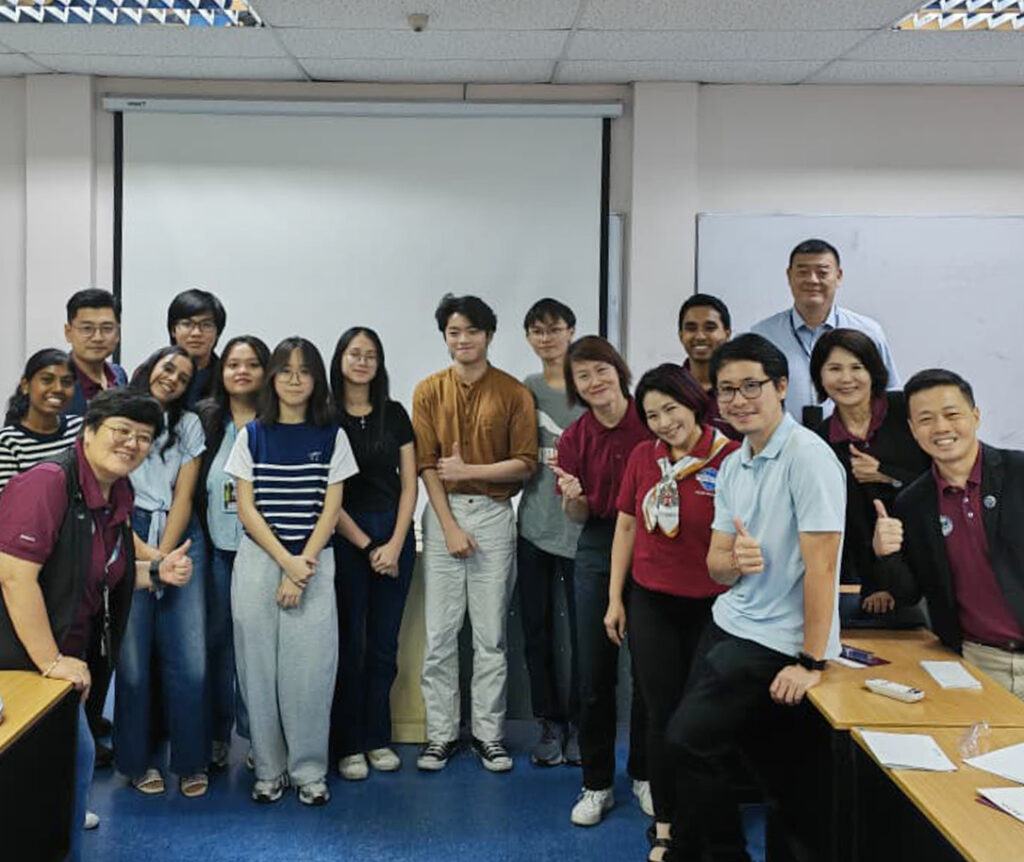
"Fail Fast, Learn Faster": Turning Knowledge into Creative Practice

Students entering the field of creative media are introduced to a wide range of industry terminology, production processes, and technical skills. They learn the language of photography, videography, audio production, and digital storytelling, becoming familiar with concepts such as composition, continuity, and audience engagement, as well as terms like aperture, depth of field, white balance, Foley sound, and colour grading. However, understanding these ideas is only the first step. Meaningful learning takes place when students apply them through hands-on production activities.
This is where studio-based learning becomes essential. Creative media is a practice-oriented discipline where knowledge is strengthened through application and repetition. Learning the function of aperture or shutter speed in a classroom setting is different from adjusting camera settings to achieve a specific visual outcome. Similarly, students may learn about lighting setups, audio recording techniques, and editing workflows in class, but it is through production exercises and creative projects that these skills become second nature.
The philosophy of “Fail Fast, Learn Faster” encourages students to approach challenges as opportunities for growth. It is not about celebrating mistakes, but about recognising that experimentation, reflection, and continuous improvement are integral to the creative process. Each production presents opportunities to test ideas, solve problems, and develop both technical and creative confidence.
Beyond technical proficiency, studio-based learning cultivates collaboration, communication, and professionalism. Students learn how to work within production teams, manage timelines, respond to feedback, and contribute to shared creative objectives. At the School of Communication, Arts and Multimedia, we believe that knowledge becomes most valuable when it is put into practice. By combining foundational understanding with immersive production experiences, we equip students with the confidence, technical competence, and professional mindset needed to succeed in an evolving creative media landscape.
Luqman Aliff
Programme Lead, School of Communication, Arts and Multimedia
Bringing Economics to Life Through Constructivist Learning Theory
The Cambridge International AS & A Level Economics (9708) syllabus places increasing emphasis on the application, analysis, and evaluation of economic concepts. Students are expected not only to understand economic theories but also to apply them to contemporary issues, interpret evidence, and make informed judgements. Higher-order thinking skills such as critical thinking, problem-solving, and evaluation are therefore central to both learning and assessment.
While learning definitions and concepts remains important, success in Economics requires students to go a step further by analysing real-life situations and considering different perspectives. Topics such as inflation, sustainability, government intervention, and globalisation often have no single correct answer. Instead, students are expected to evaluate different viewpoints and justify their conclusions using evidence and sound economic reasoning.
To support students in meeting these demands, lessons incorporate Constructivist Learning Theory, which suggests that learners develop a deeper understanding when new knowledge is connected to authentic experiences. By discussing economic issues reported in the news and relating them to syllabus content, students are encouraged to think beyond the textbook and engage more actively with the subject.
This approach helps students recognise the relevance of Economics in everyday life while strengthening their ability to analyse and evaluate current developments using economic concepts.
Ultimately, the aim is not only to prepare students for examinations but also to develop confident, independent thinkers who can make sense of the economic issues shaping their lives and the world around them.
Tan Sue Lin
Lecturer, School of Business and Hospitality
More Than a Photograph: A Journey Worth Remembering
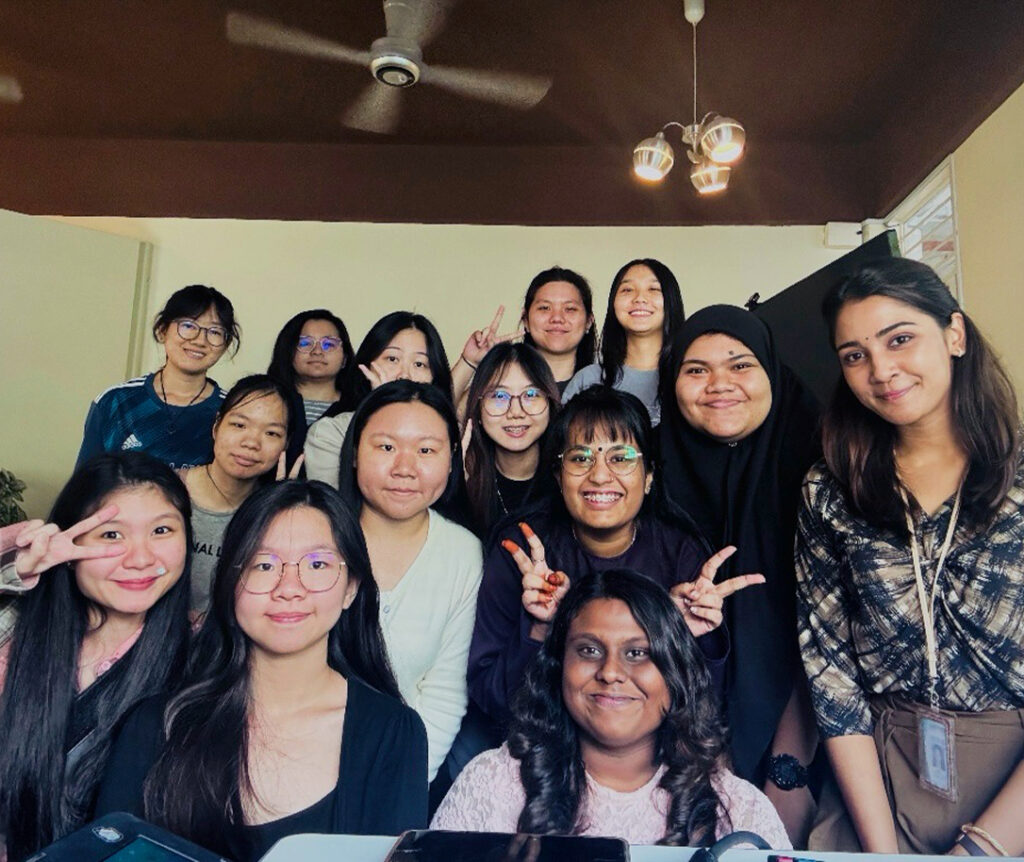
At the end of every semester, there is one tradition I always look forward to: taking a class photograph. To many, it may seem like a simple snapshot. To me, it represents something much more meaningful. It captures a journey shared by students and lecturers alike, filled with learning, growth, challenges, achievements, and memories that will be carried forward long after the semester ends.
As a Psychology lecturer at DISTED College, I often begin each semester with a classroom of unfamiliar faces. Over time, those faces become individuals with unique stories, aspirations, and strengths. Through discussions, presentations, classroom activities, and everyday interactions, we gradually build a learning environment grounded in trust, mutual respect, and encouragement.
One of the greatest privileges of teaching is witnessing transformation. I have seen students who were initially hesitant to speak confidently share their ideas and perspectives. I have watched individuals step outside their comfort zones, support their peers, and discover strengths they never knew they possessed. These moments may appear small, but they often leave the most lasting impact. They serve as a reminder that education extends beyond academic achievement to include the development of confidence, resilience, empathy, and personal growth.
Teaching has also been a learning journey for me. Every cohort brings its own energy, perspectives, and experiences into the classroom, reminding me to remain curious, adaptable, and open-minded.
When I look at a class photograph, I see more than a group of students. I see a community that learned together, encouraged one another, celebrated successes, and navigated challenges side by side. A photograph may capture a single moment, but the memories, friendships, and lessons behind it remain with us long after the camera is put away.
Thiresyinie A/P Tamil Chelvam
Lecturer, School of Psychology
Harnessing AI for Innovation, Creativity, and Communication

Artificial Intelligence (AI) is becoming an increasingly important tool in education, empowering students to learn, communicate, and create in new and innovative ways. Through an engaging session on AI in education, students explored how AI technologies can support idea generation, content writing, visual design, video production, podcast creation, and research, while enhancing productivity and creativity rather than replacing human skills.
Students were introduced to popular AI tools such as ChatGPT, Gemini, Canva AI, and Suno, gaining practical insights into how these platforms can be used to produce meaningful and impactful content. The session also emphasised the importance of writing effective prompts, evaluating AI-generated outputs, and applying critical thinking to ensure accuracy, relevance, and ethical use of technology.
This knowledge-sharing session complemented the objectives of the MIC DROP CHALLENGES 2026, which encourages students to apply creativity, collaboration, communication, and problem-solving skills through challenges such as advertising and podcast production. By exploring AI as a tool for innovation, students were inspired to develop original ideas, work effectively in teams, and communicate their messages with greater impact.
The session highlighted the growing role of AI as a supportive tool within creative and professional environments. Students were encouraged to view AI as a means of enhancing their capabilities while maintaining ownership of the creative process.
Ultimately, the key message was clear: while AI can assist and accelerate content creation, meaningful innovation continues to be driven by human creativity, judgement, and imagination. As future professionals, students are well-positioned to leverage AI responsibly and confidently in an increasingly digital landscape.
Nurul Annisa Azhar
Lecturer, School of Computing and Engineering


