
Our Diploma in Mass Communication programme provides students with the tools that they need to take their mass communication learning experience to the next level ranging from basic tools to professional tools. It ensures that the students are also well equipped with both the creative and critical thinking skills when it comes down to media production and brand management.
Our programme emphasizes on:
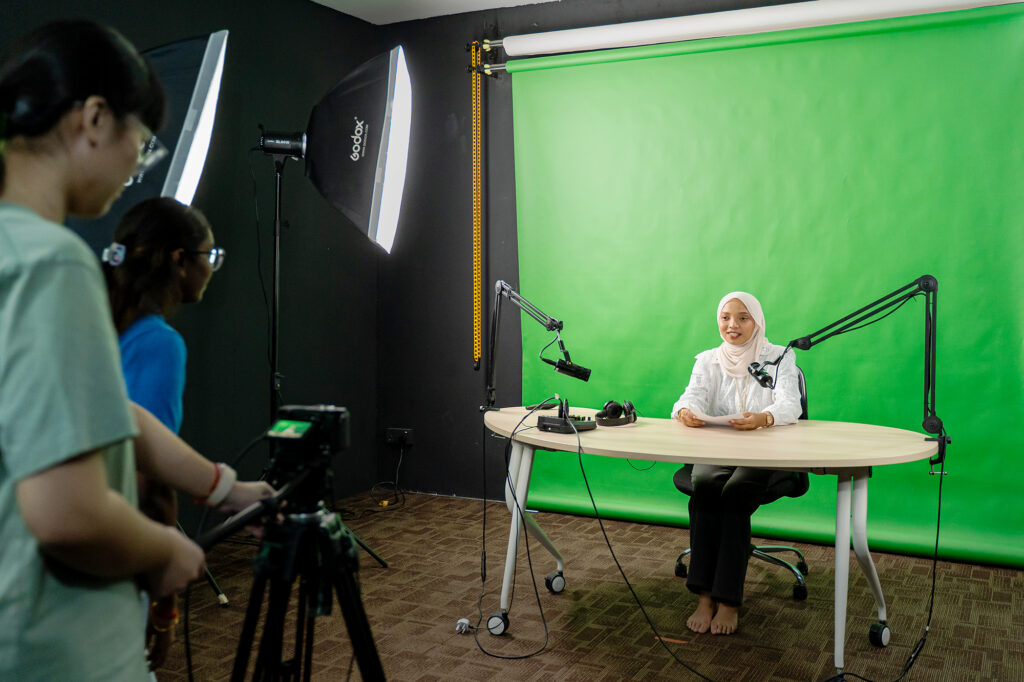
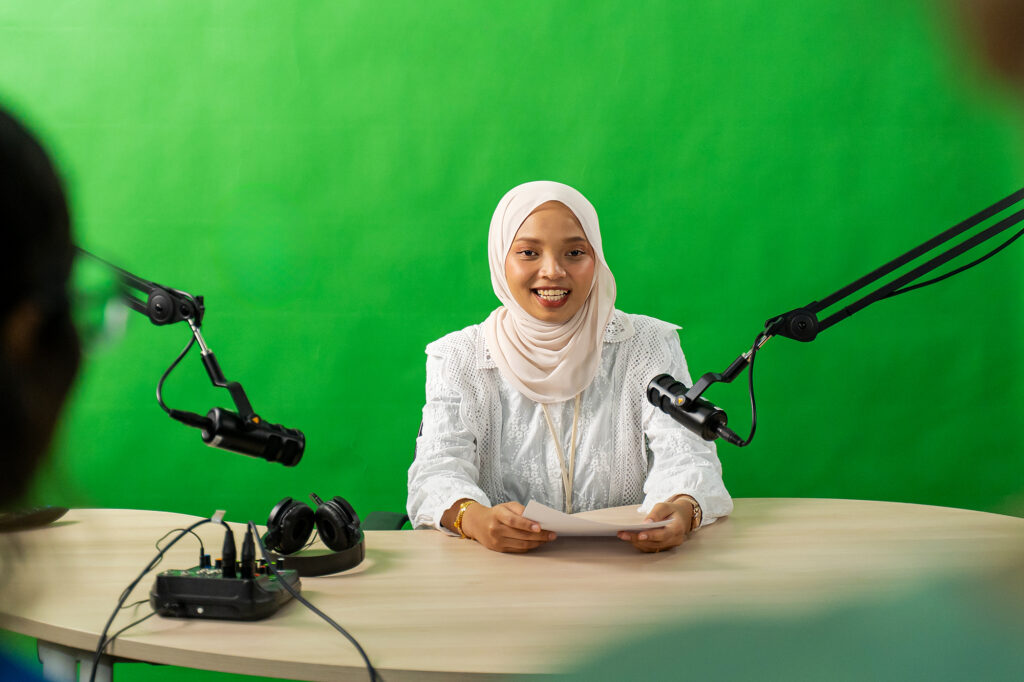
The field of mass communication is being revolutionized by emerging technologies such as artificial intelligence and virtual reality. These technologies are not only changing the way content is created and distributed but are also opening up new avenues for engagement and interaction with AI being increasingly used to personalize content, automate tasks, and analyze data.
AI is integrated into selected subjects to support smarter and more efficient workflows. In advertising, AI helps generate campaign ideas, content and audience insights. In media production, AI supports script development, storyboard planning and post-production enhancements like editing and audio refinement.
AI is part of how our students think, plan, design and produce their work. From classroom learning to real-world projects, tools such as Microsoft Copilot, Adobe Firefly and Canva help students work more creatively, efficiently and collaboratively. We guide them to use AI responsibly and with purpose, so they understand not just how to use these tools, but also when and why to apply them effectively in their future careers.
By the end of the programme, graduates will be digitally literate, confident in navigating AI tools, and equipped with well-rounded theoretical and practical skills — ready to excel in media creation, content production and communication roles in today’s AI-driven industry.
Some of the career opportunities that are commonly associated with this course are:

This programme prepares creative, strategic and industry-ready graduates for the fast-changing digital and global media landscape. Students learn core media and communication theories and apply them through hands-on projects, newroom practices and real production work. AI is integrated across selected subjects to enhance creativity, strengthen digital literacy and support high-quality content production.
Although AI supports workflow efficiency, the programme emphasises authenticity, originality, credibility and ethical practice. Students are trained to use AI responsibly while ensuring that their ideas and creative outcomes remain unique. Ethical and critical evaluation skills are developed to enable them to analyse information and produce trustworthy content.
Graduates emerge digitally fluent, confident in AI-assisted production, and equipped with strong competencies to excel in media creation, digital advertising, content development, broadcasting, journalism and future communication industries.
Our course adopts several AI tools such as :
This course aims to cultivate a strong foundation in understanding and comprehending the diverse technologies used in media, as well as providing a concise overview of the history of mass communications. It covers fundamental theories of mass communication, explores the socio-political issues that surround the media, and delves into the laws governing different media industries. Additionally, students will gain knowledge about the origins, evolution, current state, and future trends of mass communication.
Communication theories explore how messages are created, transmitted, and interpreted across different media platforms. In the context of creative multimedia, these theories help professionals design content that effectively engages audiences and conveys meaning.
This course aims to equip students with the skills to speak confidently, articulate ideas clearly, and engage with audiences effectively. Students will learn techniques for organizing and delivering compelling speeches, utilizing appropriate nonverbal communication, and adapting messages to diverse contexts and audiences.This course teaches effective presentation skills, including public speaking techniques, visual aids, body language, and audience engagement strategies. Learn to captivate your audience and deliver impactful presentations. Student will learn how to prepare and deliver a perfect presentation.
This course focuses on personal growth, self-awareness, and developing essential leadership skills. Students will explore various aspects of personal development, including goal setting, time management, communication, emotional intelligence, and teamwork. The course aims to equip students with the knowledge and skills necessary to enhance their personal effectiveness and leadership abilities.
This course aims to help students explore the fundamental of principles of public relations in the digital age. Students will learn how to gather data for PR planning and create engaging digital content, effectively use social media, and apply data analytics. Real-world case studies offer practical insights, with an emphasis on ethical considerations and crisis management strategies. The course concludes with a hands-on digital PR campaign project, equipping students to thrive in the ever-evolving PR landscape of today.
This course provides an overview of advertising, creative concepts, advertising production, media planning, campaign planning and copywriting. It exposes students to the activities and processes related to the advertising. At the end of the course, students would have grasped the concepts and approaches to advertising. Students would also be able to plan and organise effective advertising campaigns.
This course provides an overview of computer-based multimedia, encompassing various aspects such as desktop publishing, hypermedia, presentation media, graphics, animation, sound, video, and integrated authoring techniques. It also explores the fundamental technologies behind these multimedia forms. Acting as a survey course, it covers a wide range of topics to introduce students to each area and places significant emphasis on hands-on practice to ensure students become acquainted with the diverse set of tools employed in the creation of computer-based multimedia.
This course serves as an introduction to the core principles of photo communication. It offers a structured approach to studying the aesthetics, theories, and practices of modern digital photography, preparing students for careers in photojournalism for magazines, newspapers, e-media, as well as advertising and commercial photography. Additionally, the course explores the challenges and considerations arising from new technological advancements in photography, with a specific focus on media ethics, codes of conduct, and attitudes. By the end of this course, students will have gained a well-rounded understanding of the foundations of photo communication and its application in various professional contexts.
The course rationale aims to enhance students’ understanding of design elements (line, shape, form, space, texture, pattern, and color) and design principles (balance, unity, contrast, emphasis, proportion, movement, and rhythm). It emphasizes the importance of visual and textual explanations to comprehend the look and feel of designs. Additionally, the course focuses on developing the ability to interpret and communicate information through digital media for various purposes.
This module covers essential management principles, including planning, organizing, leading, and controlling. It highlights the importance of organizational structure, culture, communication, and motivation for team productivity. Students also explore modern management trends like diversity and sustainability. By the end, they’ll be well-equipped to apply these principles in real-world scenarios and improve their leadership skills for effective management across different organizations and global contexts.
Business communication is a course that covers the fundamentals of effective communication in a professional context. Topics may include writing emails, report, minutes meeting and memos, creating presentations, conducting meetings and using various communication tools. The goal is to develop skills that can improve communication, collaboration, and success in the workplace. At the end of the lesson, students will be equipped to succeed in their careers and effectively communicate with clients, co-workers, and stakeholders.
*subject to change
This course provides students with an in-depth understanding of the evolving landscape of journalism in the digital age. It explores the impact of digital technologies on news production, distribution, and consumption. Students will develop practical skills in digital storytelling, multimedia journalism, social media engagement, and ethical considerations in online journalism. The course aims to prepare students for the challenges and opportunities presented by the digital revolution in the field of journalism
A general introduction to media law and the statutory, regulatory, industry codes and ethical conventions operating in Malaysia..To provide the basic legal framework behind the creation and dissemination of multimedia content to the world in general and to Malaysia in particular.
This course introduces students to the fundamental principles and techniques of media research. Students will explore various research methods used in media studies, including qualitative and quantitative approaches. The course aims to equip students with the knowledge and skills necessary to design and conduct media research studies and critically analyze media-related data.
Students will undergo a minimum 16-week practical training at an approved private, government, or semi-government agency. During this period, they will work on assignments aligned with industry needs, as agreed upon by the School and the hosting agency. The training may involve tasks such as feasibility studies, design and prototyping, digital content creation, user experience (UX) research, testing and implementation, media production, documentation, and data processing. This hands-on experience equips students with industry-relevant skills, preparing them for careers in multimedia design, animation, web development, and other creative fields.
This course provides a comprehensive exploration of media planning, encompassing creative concepts, campaign planning, and copywriting. Through immersive experiences in these activities and processes, students will develop a deep understanding of media planning and gain the knowledge and skills required to plan and execute impactful media strategies successfully. By the end of the course, students will have a solid grasp of essential concepts and approaches in media planning which enabling them to effectively organize and implement media strategies for various platforms and campaigns.
This course focuses on developing effective writing skills for digital platforms. Students will learn the principles of persuasive and engaging copywriting, as well as techniques specific to digital media. The course will cover various digital channels, including websites, social media, email marketing, and search engine optimization (SEO), to equip students with the skills necessary to create compelling and impactful digital copy.
This course provides a comprehensive understanding of the principles and practices of public relations (PR) management. Students will explore the strategic aspects of PR, including planning, campaign development, stakeholder engagement, and crisis management. The course aims to equip students with the knowledge and skills necessary to effectively manage PR initiatives in various organizational contexts
Digital Audio explores the fundamentals of Foley, sound design, and audio editing for film, animation, and multimedia. Students will learn to record, edit, and integrate voice, sound effects, and background music to enhance storytelling. Through hands-on projects, they will create immersive audio experiences using industry-standard techniques and tools.
This course provides an introduction to the fundamentals of television production. Students will learn the essential techniques and skills necessary to produce high-quality television content. The course covers various aspects of pre-production, production, and post-production processes, including scripting, camera operation, lighting, audio recording, editing, and studio production.
Video Production course equips students with essential skills in scriptwriting, storyboarding, cinematography, and post-production. Students will learn to develop narratives, apply camera techniques, and collaborate on short films, gaining hands-on experience in storytelling and filmmaking. The course prepares students for careers in digital media and film production.
This course will equip students with the principles of entrepreneurship such as creativity, business planning, effective and efficient resource management, marketing and financial concepts for organizing and operating a small business. Students will develop skills required in preparing a solid and practical business plan. The skills acquired through this course will enable students to start a small business in the near future
This course provides an in-depth examination of communication theories and practices within organizational settings. Students will explore various aspects of communication, including verbal and nonverbal communication, interpersonal communication, group dynamics, leadership communication, and communication technologies. The course aims to develop students’ understanding of effective communication strategies to enhance organizational performance and foster positive workplace relationships.
This course covers the relation between philosophy, the National Education Philosophy and ‘Rukun Negara’. Philosophy is used as a tool to refine the culture of thought in life through the art and methods of thinking as well as through our understanding of the concept of the human. The main topics in philosophy, namely epistemology, metaphysics and logic are discussed in the context of current issues. Emphasis is given to philosophy as the basis for inter-cultural dialogue and to foster common values. At the end of this course, students will be able to see the disciplines of study as a comprehensive and integrated body of knowledge.
This course covers the basic concept of corruption including the value of integrity, anti-corruption, forms of corruption, abuse of power in daily activities and organizations as well as ways to prevent corruption. Cases related to corruption are discussed. Teaching and learning methods are implemented in the form of ‘experiential learning’ through individual and group activities. At the end of this course, students are able to understand the practice of integrity, the concept of corruption, anti-corruption, abuse of power as well as the prevention of corruption in society and organizations.
This course is designed to provide a foundation to tertiary education an adopted an approach which starts with each students undertaking a personal skills audit and self-appraisal, to the stage of agreeing and preparing a personal development plan. Topics on the module covered include gathering information skills, using IT to enhance learning, referencing skills, techniques to improve reading, learning and remembering and oral presentation and examination skills.
Kursus ini menawarkan kemahiran berbahasa dari aspek mendengar, bertutur, membaca dan menulis sesuai dengan tahap intelek pelajar. Tujuan kursus ini adalah untuk meningkatkan kecekapan berbahasa dalam konteks rasmi dan tidak rasmi. Pengajaran dan pembelajaran akan dilaksanakan dalam bentuk kuliah, tutorial, tugasan, aktiviti kebahasaan, main peranan (role-play), ujian dan peperiksaan. Pada akhir kursus ini, pelajar diharapkan dapat menguasai kemahiran berbahasa secara lisan dan tulisan.
AI Fundamentals for the Digital Age provides an introductory yet practical overview of Artificial Intelligence (AI) and its impact across different fields. This course equips students from all disciplines with the foundational knowledge of AI and hands-on experience using Microsoft Copilot. Students will explore how AI enhances productivity, creativity, and innovation in academic, professional, and personal contexts.
This course is conducted by involving students into community services and curricular activities. The activities and projects associated with this course will be fully conducted by students under the lecturer’s supervision. The lecturers are also responsible in awarding marks as well as approving the related activities and projects. The students have the opportunity to master the soft skills such as communication, critical thinking, problem solving, teamwork, continuous learning and information management as well as entrepreneurial and technical skills.
*subject to change
Malaysia:
Overseas:
2026 Intakes:
Full Fees in 2026(Approximately)(for local students):
Scholarships & Merit Award:

Royal Perdana Edukasi
Hastadi Muljono, Director
Contact Details:

Tianjin Youxue Education Information Consulting.,LTD
Vickey
Contact Details:
vickeysong_88 (WeChat)

DISTED Pulau Pinang Sdn Bhd
DISTED College (Main Campus)
Reg. No.: 199701020079 (435576-U)
340, Macalister Road,
10450 George Town, Penang, Malaysia.
WhatsApp Us
This course provides an introduction to information technology and Information systems. The student will be introduced to computer software, hardware, and networking technologies, Information systems, databases as well as information security and privacy. The subject also teaches students to maximize their use of mobile devices, make the most of online tools for collaboration and communication, and fully utilize today’s Internet capabilities. It highlights today’s most current technology trends and developments.

