
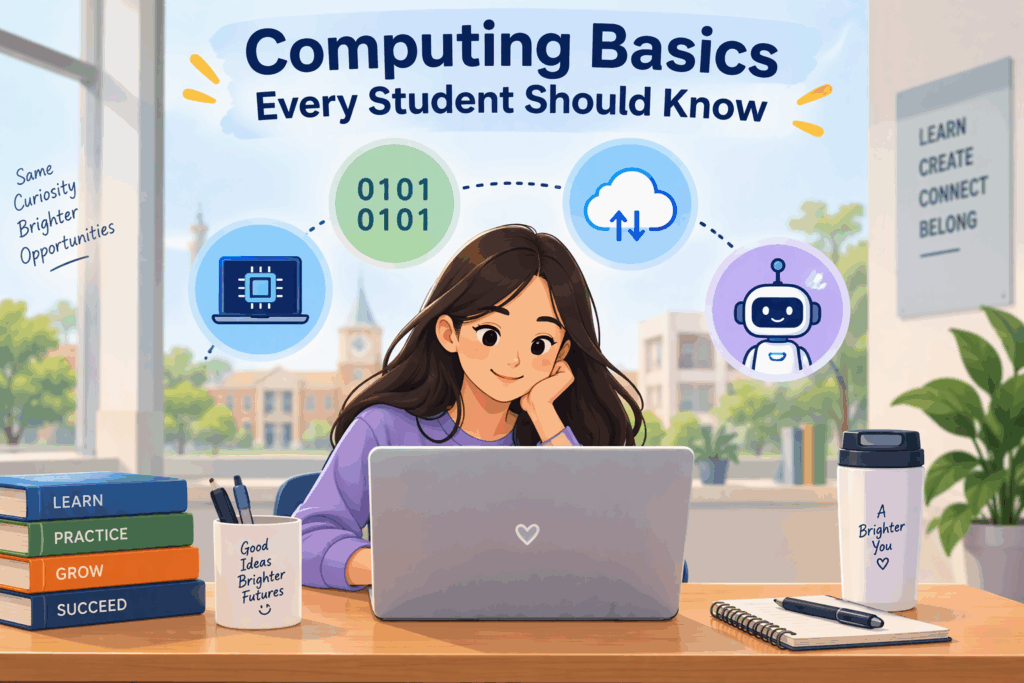
You don’t need to be a computer science major to use technology well. Four ideas explain most of what happens behind your screen.
- Computers are fast but literal. A computer stores information, compares values, and does arithmetic, billions of times per second. It does exactly what it is told and nothing more, which is why one typo in a password locks you out of the student portal.
- Everything is data. Essays, photos, and lectures are all stored as patterns of 0s and 1s. The file type, such as .docx or .jpg, tells your device how to read them.
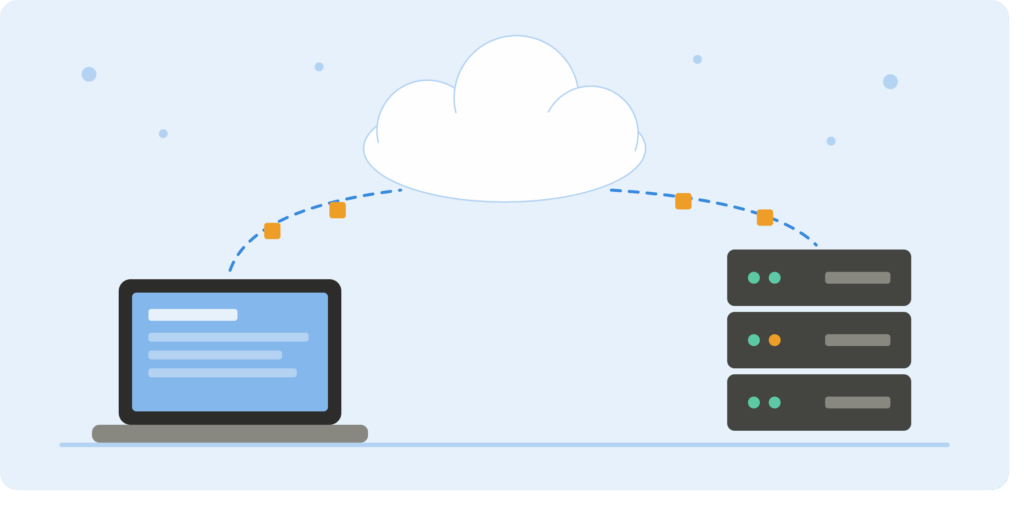
- The cloud is someone else’s computer. When you save a paper to Google Drive or OneDrive, it sits on a server in a data centre and reaches you over the internet. Websites work the same way: your device sends a request, and the server sends the page back in small pieces. When campus Wi-Fi crawls at peak hours, thousands of people are making those requests at once.
- AI learns patterns rather than follow rules. Tools like chatbots are trained on huge numbers of examples, which makes them flexible but fallible. They can sound confident while being wrong, so verify what they tell you and check your course’s AI policy before submitting work.
Habits that make a difference
- Back up your work in two places, one of them in the cloud.
- Use strong, unique passwords and turn on two-factor authentication.
- Be suspicious of emails asking for your password. Real IT staff never do.
- Install updates, since many fix security holes.
- When something glitches, restart first.
Computing is a stack of simple ideas. Once you understand them, you’ll troubleshoot faster, stay safer online, and feel more confident with the technology that shapes campus life.
Nurul Annisa Azhar
Lecturer, School of Computing and Engineering


